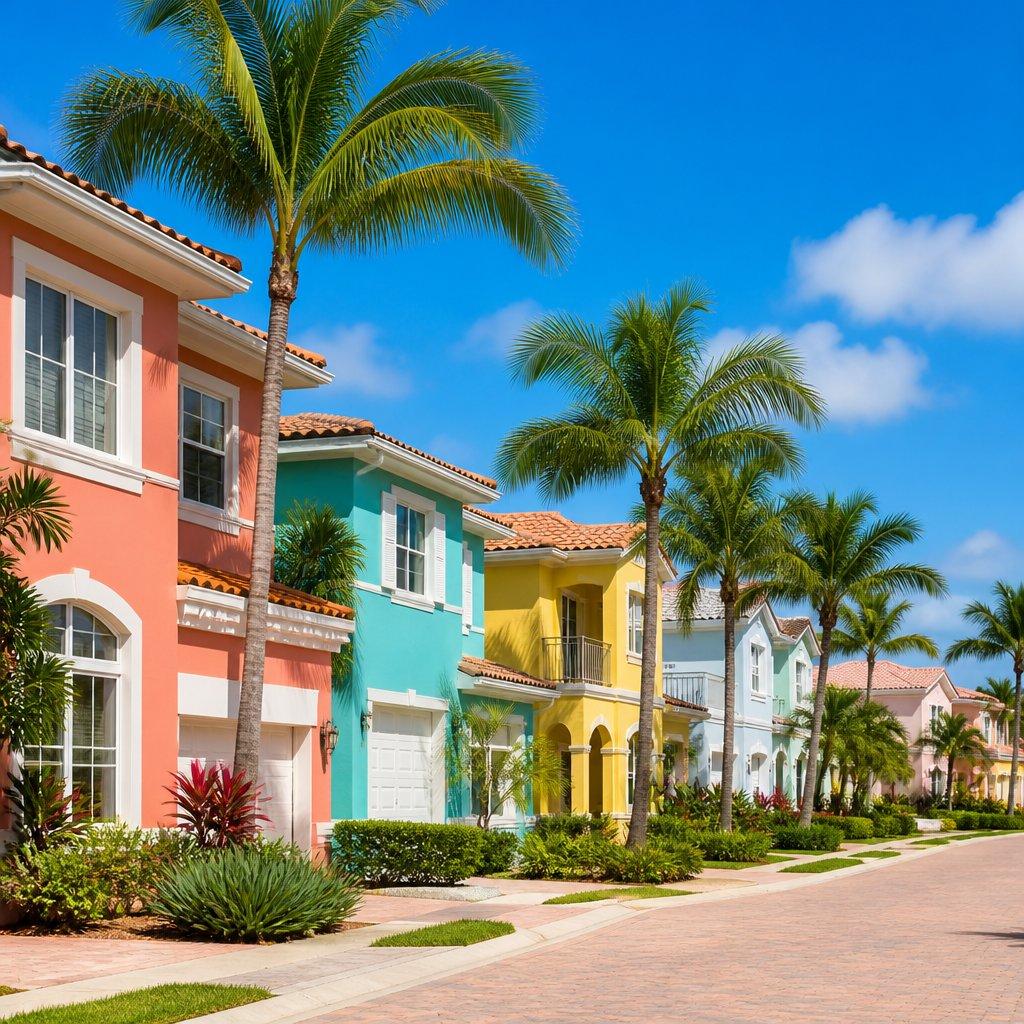
The colors that feel current in 2026 are not coming from a paint deck. They are coming off Miami runways, out of Caribbean kitchens, and from a Super Bowl stage where Bad Bunny sang almost entirely in Spanish and named half the Americas.
South Florida reads as Latin and Caribbean, and that energy ends up on the walls of its homes and communities. The trick is borrowing it without letting a dress-bright color cook on a stucco wall by August.
That is what this guide is for. If you are planning a repaint and want exterior paint colors for South Florida that look of-the-moment and still survive the UV, salt air, and mildew, you have to start a season ahead and choose shades that are built for the climate, not just the mood board. A runway red and a wall red are not the same red.
Below is a 2026 palette translated for real walls: the trend and the cultural reference behind each color, the climate-proven version of it, and where it belongs on a body, trim, or accent. Plan now, and you can get colors approved and ordered before the busy painting season.
Fashion and interior design move faster than a building's repaint cycle, so the goal is to catch the direction, then shade it down for permanence. A color that flatters a model in studio light can look washed out by noon on a south-facing wall, or fade in a single summer if it leans on organic dyes.
Two rules make a trend color last here. First, lean on mineral pigments, iron oxides, and other inorganic colorants that hold under hard UV, rather than the bright organics that pop on fabric but chalk on stucco.
Second, save the boldest, most saturated versions for accents, and keep large body areas in calmer, cooler tones. Understanding what makes paint hold up in a tropical climate is what turns a runway reference into a coating that lasts seven to ten years.
Here is the palette, grouped the way you would actually use it: calm bodies and neutrals first, then the colors that carry the cultural moment as accents.
Pantone named a soft white, Cloud Dancer, its 2026 Color of the Year, and white is everywhere on the swim-week runways. On a Florida wall, pure bright white shows mildew streaks fast and can glare, so the smart move is a warm, slightly greyed white with a mildewcide in the base. It reads clean and current without the maintenance penalty.
Alongside it, the warm sand and nude range that dominated Miami Swim Week gives you a body neutral that finally retires the cool gray now reading dated. A warm taupe or pale sand stays cooler in the sun than a deep tone, fades almost invisibly, and flatters both Mediterranean and modern architecture.
Green is the heart of the 2026 Miami story, and there are two worth using. A soft sage or olive works as a body color: a mid-tone mineral green hides stucco imperfections, holds up under UV, and settles naturally next to tropical landscaping.
The second green is the statement. Think of the lush banana-leaf green in the backyard on the cover of Bad Bunny's record-breaking album, Puerto Rico in a single frame. Shaded into a deeper, muted foliage green, it becomes a bold but grounded accent for an entry wall, a front door, or shutters on a white body. It carries the cultural moment while staying rooted in nature, which is exactly why it ages well.
This is where the Latin and Caribbean warmth comes through, all as accents, never as a full body color. The runways ran heavy on tomato red, and Miami interiors are leaning into deep barolo and oxblood. Translated to a UV-stable iron-oxide oxblood or terracotta, that red becomes a rich door or shutter color that nods to Caribbean facades without fading to pink in a year.
Deep navy and midnight blue were the dominant colors at Miami Swim Week, and as a mineral-pigment navy, it is one of the most reliable shutter and accent colors in Florida. For something softer, the periwinkle and seafoam tones from the same runways, muted with gray so they do not turn baby blue in full sun, make a gentle accent or a body color on a shaded elevation.
Color in South Florida has always tracked its culture, and 2026 leans hard into Latin and Caribbean identity. Bad Bunny's Super Bowl LX halftime show, performed almost entirely in Spanish and filled with Puerto Rican imagery, was one of the most-watched cultural moments of the year, and it put a warm, celebratory, tropical sensibility front and center. Miami design is answering with heritage prints, Art Deco revival, and palettes that feel joyful rather than muted.
For a wall, the lesson is not to copy a costume color but to borrow its spirit. Take the saturation down a notch or two, choose the mineral-pigment version, and place it where it earns attention: a front door, a band of shutters, an entry feature. A celebratory red as a door against a warm-white body says Caribbean far better than a whole building painted bright. That restraint is what keeps the look from dating the moment the trend cools.
The cleanest way to use this palette is a three-color system, which also keeps a community looking unified and makes touch-ups simple years later.
Start with the body, the largest area and the one taking the most sun, in a warm white, sand, or soft sage. Choose a trim color that frames the architecture without shouting, often a warm white against a sand or sage body, or a sand against a white body. Then let one accent carry the personality: oxblood, banana-leaf green, or deep navy on doors and shutters.
For those high-contact accent surfaces, a harder finish pays off. An enamel-grade finish on doors and shutters cleans easily and holds a deep color longer than a flat wall paint would. On the broad body walls, a satin finish on stucco balances a clean look with washability and sheds dirt better than flat.
The gap between a chip and a painted building is where most color regret starts, so test before you order gallons.
Brush a two-by-two-foot sample of each candidate onto real stucco, not cardboard, on a wall that gets both direct sun and afternoon shade. Look at it morning, midday, and late afternoon, because intense Florida light can lift a color two or three shades. Hold the samples against the fixed elements you are not changing: roof tile, pavers, stone, and railings.
If your property is governed by an HOA, submit the body, trim, and accent codes to the architectural review committee before ordering. A local paint manufacturer that can store your custom formula makes reorders and future touch-ups consistent, which matters more with every repaint cycle. It also helps to weigh the palette against how often South Florida properties need repainting so the color you pick fits the maintenance budget.
The best exterior color choices for 2026 do two things at once: they catch the Latin, Caribbean, and Miami energy that makes South Florida feel like itself, and they are built in stable pigments that survive the sun, salt, and humidity. Borrow the spirit of the moment, shade it for a wall, and place the boldest colors as accents, and your property looks current and lasts.
Ready to turn the palette into a plan? Schedule a free consultation with UCI Paints for color direction, climate-tested specs, and referrals to South Florida painting contractors. A short conversation can save a board from a color that fades by next summer. Call (954) 581-6060 or contact the Fort Lauderdale team to start.
The 2026 direction blends warm whites, sand neutrals, and soft sage greens for bodies with bold accents in oxblood, deep navy, and a rich banana-leaf green. These pull from Miami fashion and Caribbean culture but, in mineral-pigment versions, hold up to the region's sun, salt, and humidity far better than bright organic colors.
Warm whites, sands, soft greens, and muted blues last longest because they reflect heat and rely on stable inorganic pigments like iron oxides. Deep reds and navies hold well as accents when made with mineral pigments. Bright organic reds, yellows, and pure blacks tend to fade or chalk fastest under constant UV.
Keep bold colors to accent areas such as doors and shutters, and choose iron-oxide or other mineral-pigment versions rated for high UV. A harder enamel finish on those surfaces holds the color longer and cleans easily. Painting an entire body wall a saturated color is what usually leads to fast fading.
Yes, as long as you translate them. Take a runway or cultural color, lower the saturation, choose the climate-stable pigment version, and place the boldest tones as accents rather than full walls. That keeps the look current while avoiding the fading and mildew problems that bright, dress-style colors cause on stucco.
A warm greyed white or pale sand body, a complementary warm-white or sand trim, and one accent in oxblood, deep navy, or banana-leaf green on doors and shutters is a strong 2026 combination. It reads current, suits most HOA standards, and uses pigments that age well in the South Florida climate.
Start a season ahead. Choosing colors, testing samples on your own wall, and getting HOA or architectural review approval all take time, and the best painting weather runs from late fall through spring. Planning early lets you lock a custom color and order it before the busy season fills up.
