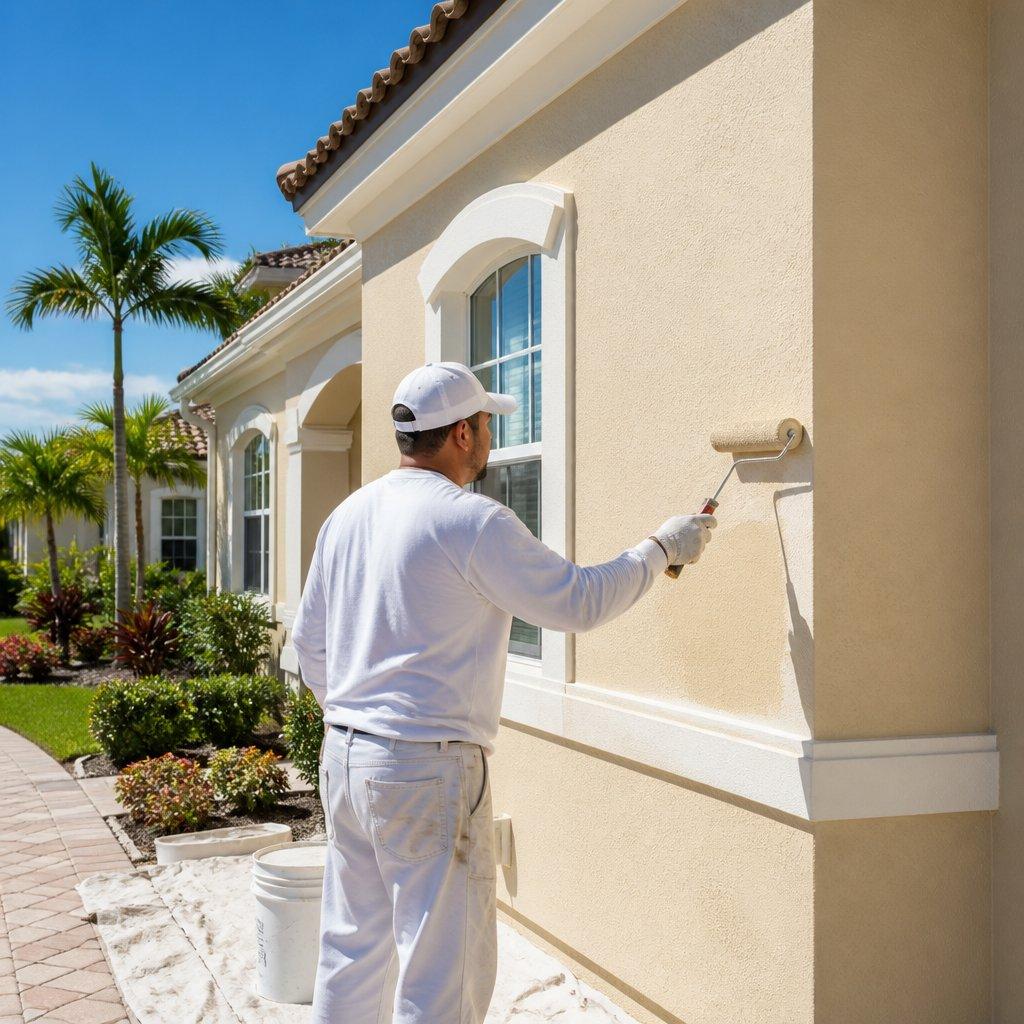
Your stucco exterior takes a beating. Relentless UV, pounding afternoon storms, and salty coastal breezes all shorten the life of a paint job, and most national guides do not account for what Florida throws at a building.
If you manage a community association or properties in Broward or Palm Beach County, waiting too long to repaint is not just a cosmetic issue. It is an invitation for moisture problems, stucco repairs, and budget headaches.
This guide is about timing: the real repaint window for Florida stucco, what shortens or stretches it, the warning signs you should not ignore, and how to budget reserves around exposure instead of the calendar. You will come away knowing what to watch for and how to plan your next project without second-guessing.
Most stucco exteriors in South Florida need repainting every five to seven years. Forget the ten to fifteen years you see in generic maintenance guides. Florida's climate does not play by those rules.
Painting stucco here runs on a faster clock thanks to constant sun, humidity, and heavy wind-driven rain. Paint that lasts a decade up north can chalk, fade, or peel in half that time down here, because daily heat and overnight moisture keep stressing the film.
Communities that hold a five-to-seven-year cycle usually avoid the bigger repair bills that come from letting coatings go too long. Stay proactive, and a good cleaning plus a fresh coat may be enough. Wait too long, and you are into scraping, patching, and priming before you reach the finish coat.
Stretching to seven or even ten years can work, but only if the last job used high-quality paint, proper prep, and a system made for Florida. Buildings with big roof overhangs, lighter colors, and less direct west or south sun sometimes make it.
But a property on the water, where salt air chews through paint, or one that got builder-grade product or rushed prep last time, will not. If your buildings sit west of US-1 and bake in the afternoon sun, plan for the shorter end.
Too many associations set repaint schedules on a fixed calendar, every eight years regardless of orientation. That paints some buildings too late and others too soon. Exposure is the smarter basis. South- and west-facing walls take more abuse and break down faster than north-facing ones, even on the same building, and coastal spots get far more salt than properties a few miles inland. When you plan the next repaint, look at the actual condition of the paint, not just the date of the last job.
The difference between repainting every five years and stretching to nine usually comes down to three things: sun and heat, moisture, and how good the last job was.
South Florida's UV index sits at 10 or higher for months. That much sun breaks down binders, causing chalking and fading, and south- and west-facing walls absorb the most heat and usually show wear a couple of years before other sides.
Darker colors soak up more heat and fail faster, so deep earth tones or dark trim tend to need attention first. Choosing coatings made for sun and humidity with UV-stable pigments helps stretch the cycle.
South Florida gets about 60 inches of rain a year, mostly in heavy afternoon storms. Add humidity above 70 percent year-round, and stucco stays damp for long stretches. If moisture gets trapped behind a film that does not breathe, you get blistering and peeling.
Salt air worsens it near the Intracoastal or ocean, where salt crystals collect, attract moisture, and speed failure. Paints with real mildew inhibitors do far better here than standard exterior latex.
Your repaint only lasts as long as the prep beneath it. Skip pressure washing, ignore loose paint, or leave bare stucco unprimed, and early failure is close to guaranteed, because paint needs a clean, stable surface to grip.
Higher-quality paint with more resin and real mildew resistance outlasts bargain product on the same wall. Properties that use paint built for tropical climates tend to reach the longer end of the window. Spotting when your current paint is already failing matters just as much.
Stucco damage builds slowly, and catching it early almost always saves money.
Hairline cracks are common here as stucco expands and contracts with temperature. Small cracks are minor at first, but once the paint over them breaks, water gets in.
Check caulk joints around windows and doors at least once a year, since failed caulk lets moisture behind the wall fast. Watch for spider-web cracking, especially on south-facing walls, which usually means the paint has gone brittle and lost flexibility.
Peeling means adhesion is gone, often from moisture behind the film or poor prep last time. Blistering points to trapped moisture trying to escape. Both leave bare stucco exposed and accelerate wear.
Chalking shows up as a powdery residue on your hand. A little is normal with age, but heavy chalk means the binders have broken down, and new paint will not stick until you clean down to a sound base.
Dark streaks are usually mildew or algae, no surprise in a warm, damp climate, and mildew actually feeds on and weakens the paint over time. White, powdery efflorescence signals water moving through the stucco and carrying salts to the surface. If it keeps returning after cleaning, you likely have a moisture problem to fix before repainting.
The best coating depends on the wall's condition, how much sun and moisture it gets, and whether you need crack bridging or breathability. The full product comparison is its own topic, so this is the short version focused on the repaint decision.
For most community projects, 100 percent acrylic latex is the go-to. It adheres well, holds color, and resists mildew without breaking the budget. On stucco in decent shape with no major cracks, a good acrylic with UV protection should give five to seven years.
Acrylics also let moisture vapor pass through, which is essential where walls absorb moisture from rain and humidity. A satin acrylic finish on stucco looks sharp and holds up for community curb appeal.
Elastomeric coatings build a thicker, flexible film that bridges hairline cracks and helps keep water out, which can be worth the extra cost on buildings with some cracking or moisture history. Keep in mind they cost more per gallon, use more material because they go on thick, and need careful application: too thin or too thick and they can trap moisture instead of blocking it.
Your paint needs to breathe, flex, and fight mildew. Block vapor and you trap water and hidden damage; too stiff and it cracks as stucco moves; no real mildew inhibitor and you get streaks fast. Look for mildewcide built into the film, not just added to the can. Paints designed for South Florida's biggest paint challenges usually address all three at once.
Plan a repaint carefully, and you spend less, finish faster, and get results that last. Clear specs and a realistic schedule beat scrambling.
The repaint you delay until the stucco is already damaged is always the priciest. Boards that fund repainting every six to seven years usually dodge the special assessments that come with last-minute repairs. Do not rely on national averages; budget from your actual building conditions, including pressure washing, caulking, minor stucco patching, primer, and two finish coats. If the last job skipped steps, expect a higher prep bill this time.
Paint needs at least a day or two of dry weather above 50°F to cure, and the sweet spot here runs November to April. Avoid scheduling a big community repaint during the rainy stretch.
If you cannot avoid summer, work with your contractor to start early and finish before the afternoon downpours.
Check every bid for exact product name, sheen, and number of coats, and make sure prep steps are spelled out: pressure washing PSI, scraping, patching, caulking, priming. Be wary of "prep as needed."
Ask for a written warranty covering materials and labor, confirm the manufacturer backs the product, and review the contractor referral process so you only get bids from licensed, insured pros who know the line.
Walk every side of every building before you request bids. Note chalking, cracks, peeling, and mildew, and take date-stamped photos to track change over time. A solid walk-through lets you prioritize buildings and phase the schedule if the budget is tight.
Watch the west- and south-facing walls especially, since they almost always look rougher than shaded sides. Setting the schedule on how often South Florida properties actually need repainting beats relying on a calendar.
Before meeting a supplier, gather your exterior square footage, records from the last repaint (product, number of coats, any warranty), and your approved color palette. If you have had complaints about peeling, stains, or mildew, bring photos. The more detail you share, the better the advice.
If your community is within a couple of years of its next repaint, or you are seeing warning signs, a free consultation can save headaches.
UCI Paints offers color recommendations, product specs, and contractor referrals for South Florida conditions, and can connect you with painting services that know the local climate. Even a short conversation can clarify your options and set realistic expectations. Call (954) 581-6060 or visit ucipaints.com to get started.
Look for heavy chalking, peeling, blistering, and mildew streaks. If your hand picks up powdery residue, the coating is breaking down. Hairline cracks exposing the substrate also mean it is time to act.
South- and west-facing walls take the most sun and usually need repainting one to three years sooner than shaded sides. Humidity over 70 percent keeps surfaces damp and feeds mildew, while heavy rainfall drives moisture into cracks and behind failing paint.
Water seeps through cracked or peeling paint into the stucco, causing blistering, efflorescence, and sometimes wall damage. Lingering moisture can grow mold inside the wall cavity, which is far more expensive to fix than repainting on time.
Pressure washing to remove dirt, mildew, and loose paint is the big one. Scrape peeling spots, patch cracks, replace failed caulk, and use a bonding primer on bare areas. Skipping any of this in Florida's climate invites early failure.
A 100 percent acrylic latex with built-in mildewcide and UV-stable pigments is what most people want in the best exterior paint for South Florida homes. If your stucco has hairline cracks, an elastomeric adds flexibility and bridges gaps better than standard acrylic.
Yes. West-facing walls take the harshest afternoon sun and break down faster, sometimes by a couple of years, and coastal buildings carry extra salt-air stress. Smart reserve studies budget for phased repaints instead of treating every building the same.
Florida stucco runs on a five-to-seven-year clock, and the buildings that beat it are the ones with quality paint, real prep, and a schedule built on exposure rather than the calendar. Watch the west and south walls, track the warning signs, and fund the cycle before damage forces your hand.
Schedule a free consultation with UCI Paints for color ideas, product specs, and contractor referrals tailored to South Florida. Call (954) 581-6060 or visit ucipaints.com to get started.
