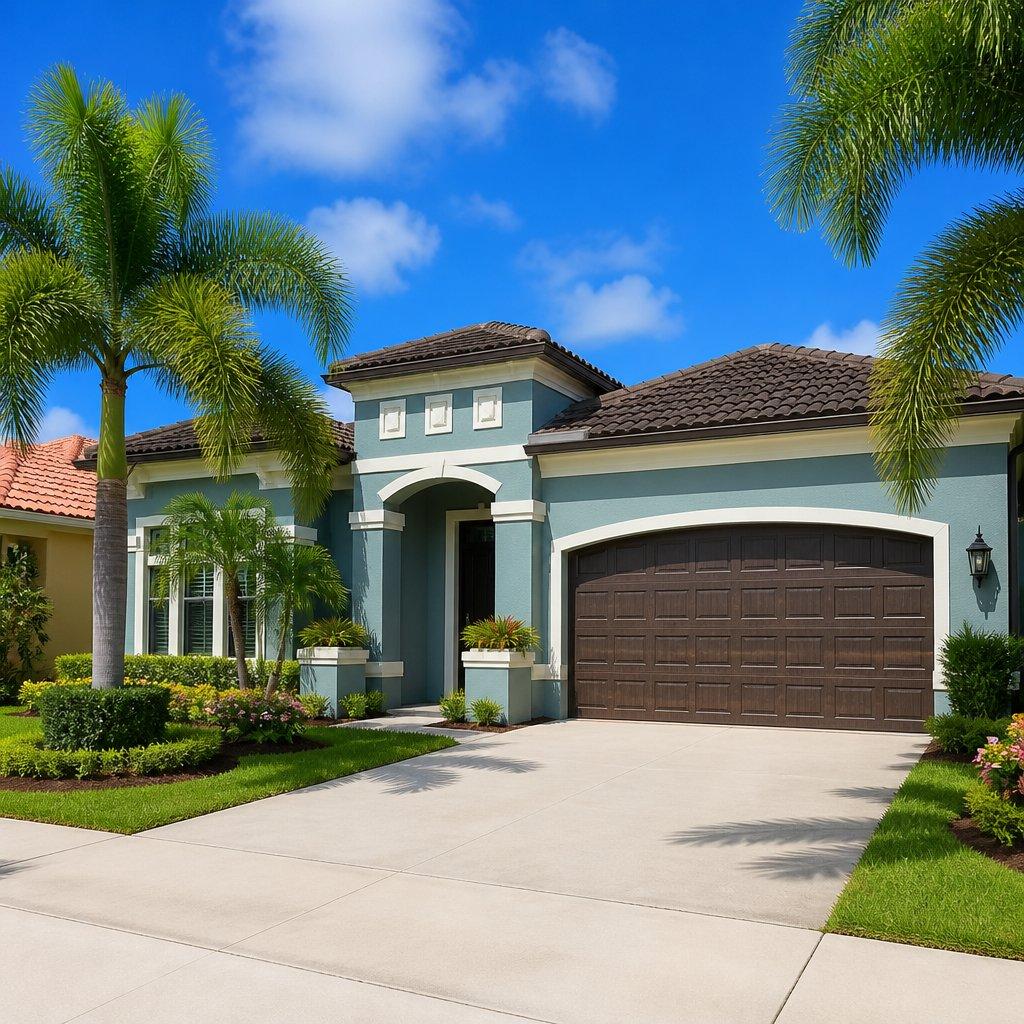
Picking Florida exterior paint colors for a stucco community looks simple until the first repaint cycle arrives sooner than you hoped.
A color looks perfect on the sample, the board approves it, crews cover every building, and eighteen months later the south-facing walls look washed out, and mildew streaks have crept across the trim. It is rarely the color's fault. The choice did not account for how this climate works on pigment across big stucco surfaces.
This guide takes a different angle from a standard palette roundup. It focuses on the part that actually determines whether a color survives: which pigments hold up, how undertones shift by wall orientation, how to match sheen to mildew pressure, and what to document so your selections clear architectural review and stay consistent across dozens of buildings.
By the end, you will know how to assemble a Florida-ready palette that still looks sharp years later, and how to get it approved without a second round of board debate.
Some pigments simply last longer in the sun, and that is the first thing to understand when choosing colors for a Florida exterior. Organic pigments, the bright reds, deep yellows, and bold purples, fade fast under UV. Inorganic pigments, found in earth tones, warm grays, and muted greens, hold their color far longer. Here, that difference is bigger than most people expect.
A paint chip in a conference room never matches what you see at 2 p.m. on a west-facing stucco wall in Boca Raton. Warm whites with yellow undertones can look buttery or dingy in full sun within months. Cool undertones like blue-grays can drift toward lavender on big, sunlit surfaces.
The only reliable check is to test undertones on the actual wall and orientation before deciding. A greige that looks right on a north wall can read peachy or pink on a south wall where heat and reflected light pile up. This is the kind of behavior generic color guides never cover.
LRV measures how much light a color bounces back, from 0 to 100. Higher numbers mean more reflection, which keeps stucco cooler. For Florida, aim for an LRV of 55 or higher to cut heat. The same logic behind reflective cool surfaces in hot climates applies to exterior walls, not just roofs.
Dark colors with LRVs under 30 absorb heat, which speeds paint breakdown and raises cooling costs. You do not have to default to plain white, though. Warm grays, muted coastal blues, and light greiges can all hit the 55 to 70 range and still look interesting.
A three-part scheme, body, trim, and accent, does more than look good on move-in day. It lowers maintenance, makes touch-ups less obvious, and keeps a property cohesive as buildings age at slightly different rates. The trick in Florida is making sure every part of the palette can take the same sun and moisture.
Pick a body color from the high-LRV families above. Pair it with a trim color a shade lighter or darker that shares the same undertone.
Then choose one accent for doors or shutters. Keeping body and trim in the same pigment family helps them fade at the same pace, which prevents the mismatched look that surfaces a year or two in.
For example: a warm white body at LRV 78, greige trim at LRV 62, and a muted navy accent on doors and shutters. Body and trim share undertones, so they age together, and the accent covers little area, so an earlier touch-up there is manageable.
Coastal communities face salt air on top of everything else, and salt speeds chalking, especially on darker colors. Neutrals like warm whites and soft grays show chalking far less than bold blues or greens. For a coastal look, keep blues and aquas to accents rather than the main body.
Palettes property managers report holding up well over five years:
Accents are where you can take a small risk, as long as you keep them to small areas. Navy shutters, deep green doors, or charcoal railings add curb appeal without a big maintenance burden, since repainting a door or a few shutters is far cheaper than a whole building.
Using coatings that resist salt, sun, and humidity on those spots stretches the time between touch-ups.
Sheen is not only about looks. It decides how well paint handles humidity and rain, and it changes how color reads on textured stucco, so it affects both style and performance.
Rough stucco scatters light, making colors look darker and duller than they do on a smooth chip. A medium-texture wall can shift a color by half a shade. If you are choosing from a flat chip, expect the real wall to look different.
The only way to be sure is to test the color on actual stucco at full film thickness, which matters most with warm whites and greiges, where small shifts are easy to spot across buildings.
Sheen Level
Mildew Resistance
Dirt Release
Best Application Area
Flat
Low
Low
Body walls with minimal moisture exposure
Satin
Moderate-High
Moderate
Body walls, trim, covered areas
Semi-Gloss
High
High
Trim, doors, railings, accent areas
Flat hides imperfections but soaks up moisture and is harder to clean. A satin finish on stucco hits the middle ground, resisting mildew while still looking right on large surfaces. Save semi-gloss for trim and accents where easy cleaning matters.
With humidity hovering around 75 percent, mildew and algae find exterior walls easily. Higher-sheen finishes create a tighter surface that gives spores less to grab.
A mildew-resistant formula in satin or semi-gloss, especially on shaded or north-facing walls, makes a real difference. Buildings painted with coatings built for tropical climates usually carry antimicrobial additives, which, paired with the right sheen, means less frequent pressure washing.
Nothing undermines a fresh repaint faster than color that varies between buildings. Uniformity comes from standardized codes, clear specs, and a solid approval process from the start.
Most Florida HOAs route exterior color changes through an architectural review committee. Submit your palette with exact paint codes, LRV numbers, and sheen details. Boards that hand over complete information get approved faster and with less back-and-forth.
If your community's rules reference a specific palette, confirm your choices fit or secure a formal amendment before bidding. Review members are volunteers, so clear visual documentation makes their decision easier.
Color can drift between batches on big projects. Ask your supplier to source the whole job from one run or to check every batch against a master sample. A manufacturer that controls its own production can hold every batch on target.
Older buildings may absorb more paint and read darker, so a uniform primer or sealer before the topcoat helps even the final color across the property.
Build a color binder for the board with these essentials:
This package speeds approvals, reduces confusion during bidding, and becomes a permanent reference for future repaints.
A small chip cannot show what 10,000 square feet of stucco looks like in full Florida sun. Testing real samples on your actual walls, at scale, is the difference between a good choice and a regret.
Paint two-foot-by-two-foot patches on each building orientation and let them dry for at least 48 hours. Check each at 9 a.m., noon, and 4 p.m. Morning light reads cooler, midday sun washes out subtle color, and late afternoon pushes everything warmer. A color that looks great at 10 a.m. can turn odd under harsh midday sun.
Each wall fights a different battle with the sun. South and west walls take the most heat and UV and fade quickest. North walls stay cooler but pick up more mildew. East walls get strong morning sun that dries dew but still delivers UV.
If differences are big, adjust the body color by a half shade or move to a line with stronger UV resistance.
Not all exterior paints are built the same. The best options for tropical climates use 100 percent acrylic resins and UV-stabilized pigments, which outlast vinyl-acrylic blends. Before deciding, ask for the reasons a building needs specialized paint, including UV resistance, flexibility on stucco, and mildew resistance. Knowing how often you will need to repaint helps you decide whether paying a bit more upfront is worth a longer cycle.
The difference between a smooth repaint and a stressful one often comes down to documentation and timing. Boards that follow a clear process avoid last-minute changes and post-job complaints.
Run through this before voting or sending anything to bid:
If the board cannot agree, or your community mixes stucco textures and building ages, a local color consultant saves time. Someone who knows Florida paint performance can read your orientation, substrate, and existing coatings, then recommend products and colors that actually work here. This matters most for large communities, where a bad color choice gets expensive to fix fast.
Choosing Florida exterior paint colors for stucco is about climate as much as design. Pick pigments that stand up to UV, use sheens that fight mildew, and document everything so your board and contractor stay aligned.
When you are ready, schedule a free consultation with UCI Paints for color ideas, product specs, and contractor referrals tailored to South Florida. A short call with the Fort Lauderdale team can save your community years of repainting headaches. Call (954) 581-6060 or visit ucipaints.com to start.
