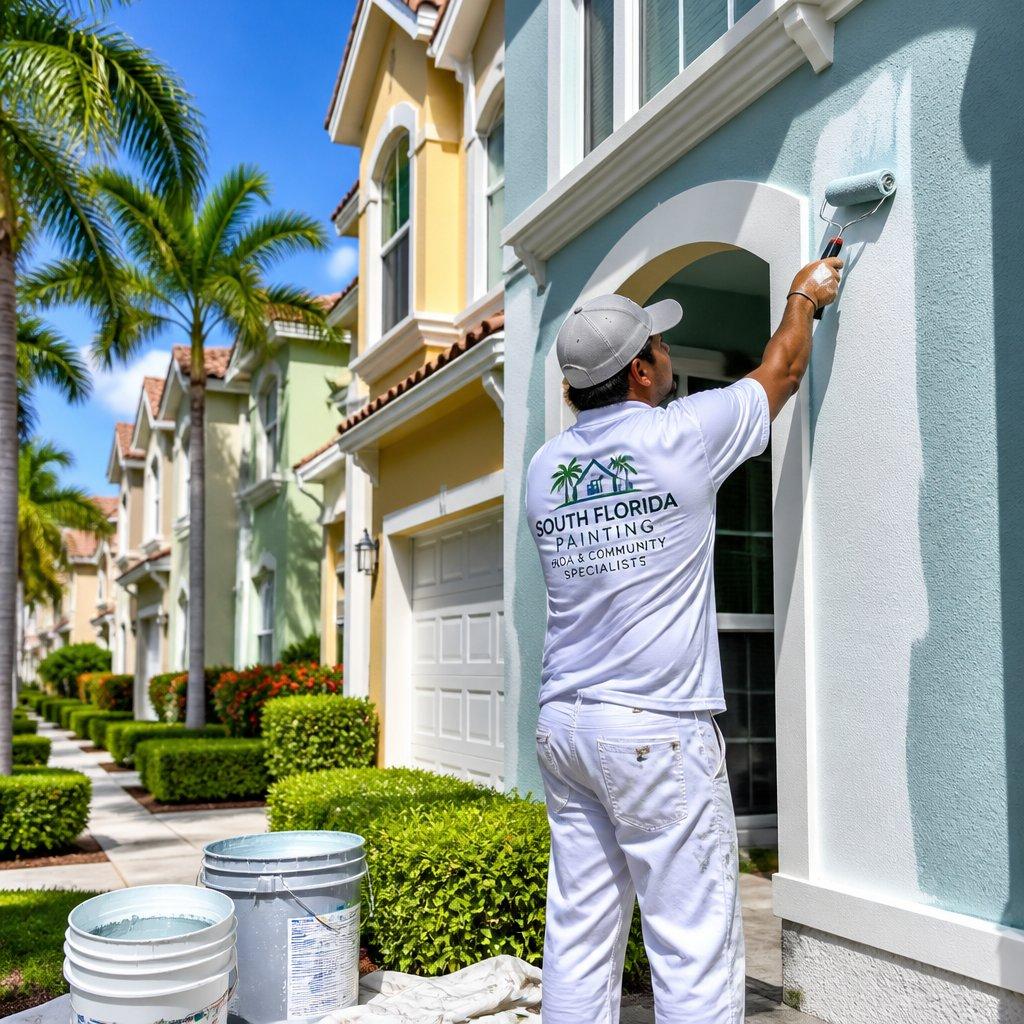
The complaint usually starts at building seven. A board approved a 200-unit repaint, the crew worked through the property over four months, and now a resident is standing in the parking lot pointing out that building seven looks a shade lighter than building two. Nobody changed the color on paper. The paint just came from a different store mix, weeks apart, and the wall is telling on it.
That is the exact problem custom paint in South Florida is built to solve. When a local manufacturer formulates and batch-controls your coating instead of a retail machine tinting it on demand, the color stays locked from the first building to the last.
For an HOA board or property manager in Broward or Palm Beach County, that consistency is not a luxury. It is what keeps the property looking like one community and keeps touch-ups from turning into a guessing game.
This guide covers how local custom formulation actually works, which coatings matter for body, trim, and high-traffic surfaces, what to confirm on a spec sheet, and how to lock a color standard you can reorder years from now without the parking-lot conversation.
Retail paint lines are built for the widest possible audience, so they compromise on the details that matter to a 150-unit community baking in subtropical sun. Custom formulation closes the gap between what a mass-market product does and what your buildings actually need.
Paint mixed at a store depends on that store's tinting machine, its calibration that day, and the base it pulled. Order more months later from another branch, and a small shift creeps in. On one house, nobody notices. Across forty buildings painted over a season, those small shifts stack into a visible patchwork.
Custom-made paint avoids the drift by locking the formula at the plant. Every batch uses the same pigments, the same base, and the same resin, tied to one paint code. The color holds even when the project stretches across two budget years.
That consistency quietly protects resale value too. Buyers read a faded cluster next to a fresh one as deferred maintenance, even when the only difference is a batch mismatch.
Sheen is the second place off-the-shelf paint stumbles on big jobs. A satin from one production run can read glossier than the next if the formula shifted for cost or supply reasons. Where two buildings meet, or where a touch-up overlaps older work, that gloss difference catches the eye in raking afternoon light.
With a locked custom formula, the sheen and film build stay the same every time. A painter can match a section years later instead of repainting a whole elevation to hide a patch. Fewer surprises like that mean fewer change orders and a maintenance reserve that behaves.
It starts with a conversation about your property, not a product catalog. A manufacturer reviews your surfaces, your exposure, and your goals before mixing anything.
In the first visit, the team checks substrate type, existing coatings, sun exposure, and how close you sit to saltwater. A west-facing concrete wall in Fort Lauderdale takes a very different beating than a shaded north wall in Boca Raton, and those details drive resin choice, pigment load, and primer.
The conversation also maps scope. Body, trim, and accent colors, plus pool decks, breezeways, or parking structures that each need their own coating. Pinning that down early keeps your bid documents accurate and your phases realistic.
After the walkthrough, the manufacturer builds physical sample boards and digital renderings so your committee sees the color on your actual building in real daylight, not under store lights. Color read off a spectrophotometer, an instrument that measures color precisely, beats anyone eyeballing a chip.
Once the committee signs off, the formula gets a unique paint code tied to your community. That code captures pigment ratios, base, sheen, and additives. It becomes your permanent record for every future order and touch-up.
South Florida is brutal on coatings, so a local formula bakes the defenses into the base rather than bolting them on. UV stabilizers slow chalking, mildew inhibitors fight the constant humidity, and flexible resins absorb the daily temperature swing. Understanding how a tropical climate works against paint is what separates a five-year repaint from a ten-year one.
Because these additives are in the base, you are not paying for a separate mildew treatment or buying a clear coat to add UV protection later. The chemistry is set before the paint leaves the plant.
Once you approve the formula, production runs under batch control so every pail matches the last. A local plant can deliver straight to the jobsite, often at no charge, on a schedule that tracks your contractor's phasing.
Exterior paint is one layer in a system that shields the property from sun, rain, and salt air. The right mix of body, trim, and floor coatings is what decides how long the job holds.
Body color covers the most area and takes the most UV, so a 100 percent acrylic latex with UV stabilizers outlasts cheaper vinyl-acrylic blends. Trim and accents do better with a harder, higher-sheen film that cleans easily along fascia and window frames, the same logic behind matching enamel finishes to high-wear surfaces.
Accent colors are where custom paint in South Florida really shows its value. Broad accents fade fast in direct sun unless the pigments are chosen for lightfastness. A local formulator can specify iron-oxide or complex inorganic pigments that hold their depth for years, where a retail-mixed dark might wash out in eighteen months.
Breezeways, walkways, and pool decks need floor coatings that take foot traffic, moisture, and mildew, often with a textured finish for slip resistance. Exposed wood on pergolas and railings wants a coating chosen for movement; a finish that soaks in handles humidity swings better than a heavy film that peels at the edges.
Primer is not optional on South Florida exteriors. A bonding primer grabs porous stucco and concrete and gives the topcoat something to hold. A clear stucco sealer for Florida walls adds moisture defense without changing the look. Get the primer and sealer right and everything above them lasts longer.
The spec sheet is the most important document in the whole project. It tells you what the product can actually handle in this climate.
Look for four numbers: recommended dry film thickness, UV resistance, mildew resistance, and the recoat window at 80 degrees and 80 percent humidity. Plenty of products list recoat times at 70 degrees and 50 percent humidity, which is not a South Florida afternoon.
Match the finish to the surface, too. Flat and satin finishes on stucco hide imperfections and still shed dirt, while semi-gloss suits doors and railings you want to wipe down. Save gloss for small accents, since it shows every flaw.
A manufacturer that helps with bidding can write specs listing acceptable prep, mil thickness, and coat count, so every contractor quotes the same scope.
During the job, periodic inspections confirm the crew is hitting that thickness and prepping correctly, catching a problem before a whole elevation is coated wrong. If vetting crews is the hurdle, a referral to licensed painting contractors connects you with people who already know the product.
Ask what the warranty covers before you sign:
A manufacturer based in South Florida can respond in days, not weeks. If a trim color reads wrong once it is on the wall, a local plant can pull your formula, adjust the tint, and ship a corrected batch before your crew finishes the next building.
Midproject changes are almost inevitable. A board decides the accent feels off, or a contractor underestimates how much textured stucco drinks. A South Florida paint manufacturer can reformulate, resample, and redeliver in a few business days, or get more gallons to the site the next morning, instead of leaving your crew idle while a national call center logs the request.
Condos and clubhouses have specific needs, from low-odor corridor paint to deck coatings that shrug off chlorine and standing water.
A regional manufacturer sees these conditions on real jobsites, not in a distant lab, and its reputation rides on every property in the area. That accountability tends to show up in how a problem gets handled.
Before you commit, get straight answers to these:
The answers reveal whether a supplier is selling paint or partnering on the project, and that difference shapes how the whole repaint goes.
Every gallon you put up today should make the repaint in five or seven years simpler and cheaper. That planning starts the moment you lock the formula.
Your paint code is the backbone of a standard the next board can reorder without guessing. Keep it with the spec sheet, finish type, and application notes in the community's maintenance records. Ask the manufacturer to hold a sample from each batch, and keep a sealed, labeled gallon of each color on site as a physical reference. If a warranty question ever comes up, the original spec and batch number speed the claim.
The best time to reach out is before you assemble the bid package. Schedule a free consultation with UCI Paints to get color direction, product specs, and contractor referrals tuned to South Florida. Their team can walk your property and help build a spec that protects both your budget and your buildings. Call (954) 581-6060 or visit the Fort Lauderdale team to set it up.
A 100 percent acrylic latex with UV stabilizers and a dry film thickness of at least 4 mils per coat tends to last longest on South Florida exterior walls. Applied over a good primer on well-prepped stucco, products built for the region's sun and humidity usually hold up 7 to 10 years.
Pick a paint with mildewcides blended into the base, not just a surface additive. Corridors and breezeways trap moisture and restrict airflow, so mildew sets in fast. A flat or satin finish with factory-added inhibitors resists growth far longer than standard wall paint.
Pressure wash first to clear mildew, dirt, and loose paint. Let the surface dry at least 48 hours if humidity is above 70 percent. Use a bonding primer made for cementitious surfaces before the topcoat. Skipping any of these steps is a common cause of early coating failure in South Florida.
Ask for a written warranty covering both product defects and the labor to reapply. The proposal should list the paint code, number of coats, required mil thickness, and prep standards. If the warranty covers product only, the association can end up paying full labor if the coating fails early.
Retail tinting depends on a store machine and the day's calibration, so batches drift over a long project. Custom formulation locks pigments, base, and sheen at the plant under one paint code, and a spectrophotometer measures color precisely. That gives you consistent color across buildings and future repaints.
Record the paint code, spec sheet, finish, and application notes in the community's maintenance file, and ask the manufacturer to retain a batch sample. Keep a sealed, labeled gallon of each color on site. With those references, a new board or manager can reorder the exact product without re-matching.
