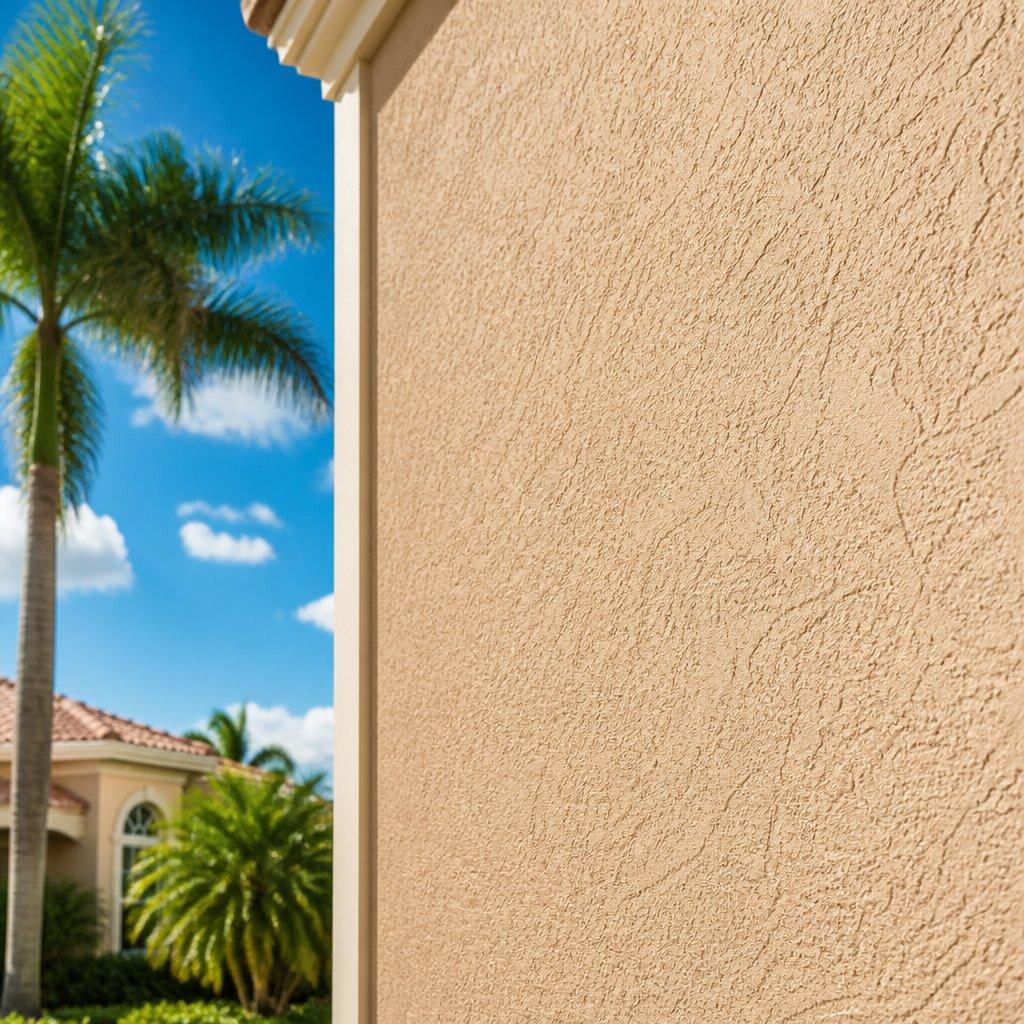
Stucco covers a huge share of South Florida's homes, condos, and clubhouses. When it is time to repaint, the choice is not just about color; it is a major financial decision.
Pick the wrong paint, and you will see peeling, mildew, and moisture problems within a couple of years. The right paint holds its color, flexes with the surface, and stands up to Florida's relentless sun, salt, and rain.
Finding the best exterior paint for stucco in Florida is not about grabbing whatever is popular at the hardware store; it is about matching the paint's features to both your walls and this climate.
Most paint advice is written for milder climates, and Florida stucco plays by different rules. It expands and contracts with wide temperature swings, pulls in moisture from the air and ground, and grows mildew quickly without a coating built to fight it.
Climate-tested coatings made for South Florida stucco behave differently than products built for gentler weather, which is the gap between a finish that lasts eight years and one that fails in two.
This guide covers which paint types last on Florida stucco, the product traits that matter here, and how to read a spec like someone who has watched a few jobs go sideways. By the end, you will know how to tell a paint job that lasts from one that flakes out early.
Jumping into product comparisons without understanding stucco can cost you. Florida's stucco has quirks that change what you should look for in a paint.
South Florida gets more than 60 inches of rain a year, and in summer exterior walls can hit 150°F to 160°F in the sun. Intense UV breaks down binders and fades colors. High humidity traps moisture at the surface. Daily rain finds every tiny crack. Near the coast, salt air speeds oxidation and weakens adhesion.
Most paints designed for gentler climates cannot keep up with all four stressors at once, which is why you see chalking, peeling, and fading well before the paint should give out. So when you choose paint for Florida stucco, flexibility, vapor permeability, and salt resistance should top your list, not just coverage or price.
Most older Florida homes use traditional Portland cement stucco. It is alkaline and very porous, and like concrete, it is naturally water-wicking, pulling moisture inside through tiny capillaries. Seal it too tightly and moisture gets trapped behind the film, pressure builds, and the paint blisters or peels from the inside out.
Breathable paints let water vapor escape while still blocking liquid water. That breathability is essential in Florida, where walls dry slowly because of the humidity. Skipping it is one of the main reasons paint fails early on stucco here.
Hairline cracks are a fact of life after a few years, since Florida's heat makes the surface expand and contract. If the paint is too rigid, it will not flex with those cracks. It might bridge them briefly, but the crack reopens and the paint splits. If you see hairline cracks on more than 20 percent of your stucco, standard acrylic is not the answer. You need a flexible, higher-build product made to move with the wall.
Not every stucco building needs the same paint. The right one depends on the wall's condition, how much cracking you see, and how much weather it faces. Starting with the wrong type wastes money and means repainting sooner.
If your stucco is in good shape, with no big cracks, no leaks, old paint still holding, premium acrylic latex is usually the way to go. It bonds well, lets stucco breathe, and keeps mildew at bay with the right additives.
It also applies easier than elastomeric paints, which matters on big repaints. Just make sure you are getting 100 percent acrylic, not a vinyl-acrylic blend; vinyl-acrylics flex less and fade faster.
Elastomeric and acrylic-elastomeric paints are thicker and more flexible, made to bridge hairline cracks and move with the wall, so they fit older stucco with visible cracks or a history of moisture problems.
Acrylic-elastomeric products blend elastomeric flexibility with the breathability of acrylic, which matters here because pure elastomerics can trap moisture in humid conditions. For a 20-year-old condo in Fort Lauderdale, the right paint for stucco with active hairline cracks is usually an acrylic-elastomeric applied at the proper thickness, not a regular acrylic stretched too far. Do not use elastomerics on walls with active leaks or structural cracks; fix those first.
Masonry and mineral-based coatings have their place, but it is niche. Masonry paint works best on bare or lightly prepped stucco, soaking in and bonding well.
Mineral or silicate paints bond chemically with the stucco, making them very breathable and peel-resistant, but they do not bridge cracks much and need a bare surface, so they do not work over acrylic or elastomeric paint. They suit historic buildings or jobs where breathability matters most.
After you pick a paint category, focus on the features that actually help it survive Florida's weather.
Crack bridging comes down to how far a paint stretches before breaking and how thick it dries. Standard acrylic goes on at about 4 to 6 mils dry, while elastomeric can reach 10 to 20 mils or more, and that extra thickness spans cracks and adds durability.
Flexibility is elongation percentage: a product that stretches 200 to 400 percent flexes a lot before breaking. Where a south-facing wall hits 160°F, stiff paint gets brittle fast, so check elongation numbers, not marketing claims, and look for the ability to bridge at least 1/16 inch cracks.
Paints are rated for vapor permeability in perms. For Florida stucco, you want a paint that blocks liquid water but lets vapor out; anything above 5 perms usually works, while near-zero perms are true waterproofers that cause problems on stucco.
A label that says "waterproof" does not mean breathable, so always read the technical data sheet. This matters most when comparing exterior coatings that hold up in salt, sun, and humidity, where the sheet should list both water resistance and vapor transmission.
Florida gets some of the highest UV in the country, which breaks down binders, causes chalking, and fades colors, so coatings with UV-stabilized pigments and cross-linked acrylics hold up much longer.
Mildew resistance comes from the mildewcide package, not the base resin, so look for coatings that list a mildewcide as an ingredient, because a north-facing wall can start growing mildew in under a year without it.
Color retention is not just vanity; faded stucco reads as deferred maintenance and drags down property value.
Flat finishes hide imperfections but grab dirt and are hard to clean in a damp climate. A satin finish on stucco cleans up better and adds a subtle sheen that helps fight mildew. Skip semi-gloss and gloss on big stucco exteriors; they highlight every flaw and glare in the sun.
Even the best paint will not last if the surface is not ready. Down here, prep decides whether a coating lives out its full service life or fails early.
Walk the property before you write specs. Check for cracks, old paint condition, efflorescence, and moisture stains, paying special attention to west- and south-facing walls that take the worst sun. Test for chalking: if the binder has broken down, new paint sticks to the chalk, not the wall, so chalky surfaces need thorough cleaning and usually a bonding primer before topcoat.
When patching stucco, use a compound compatible with your topcoat and let it cure completely before priming, especially in humid weather.
Masonry primers do two jobs: they seal the surface and give the topcoat a solid base. On previously painted stucco, a penetrating bonding primer handles adhesion risk; on bare stucco or fresh repairs, a masonry primer seals porous spots so the topcoat does not soak in and disappear. Skipping primer to save money usually means repainting sooner.
Put a dense waterproofing coating over stucco with hidden moisture, and you trap that water inside.
As the sun heats the wall, the moisture tries to escape as vapor and pushes the coating off. The smarter move is to fix the moisture source first, then use a breathable primer, then your topcoat.
As the forum discussion on painting stucco without trapping moisture points out, waterproofing is not always the fix and sometimes makes things worse. Decide whether to waterproof in the planning stage, not on the job site.
Before you sign anything, get these in writing:
Choosing paint for a big exterior job is not like picking a color at the hardware store. You need performance data, references that match your climate, and a supplier who supports the project.
Always ask for technical data sheets, not brochures. You want elongation percentage, vapor permeance, mildew resistance, and recommended film thickness, and if a supplier cannot show this, that is a red flag.
Get contractor references from South Florida jobs that wrapped at least three years ago, because what matters is how the work holds up after a couple of brutal summers, not how it looked on day one.
A supplier's portfolio of completed South Florida projects tells you more than a stack of before-and-after photos.
Warranties vary widely. Some cover only materials; others include labor if you use a certified applicator. Read the fine print and exclusions, not just the number of years. Application oversight matters as much as the warranty: suppliers who inspect during big projects catch improper application or dilution before it becomes a warranty headache, which protects both the HOA and the contractor.
Paint made and tested in South Florida carries weight. Local manufacturing means quicker reorders, direct tech support, and a supplier who knows how the formula performs on local stucco after years in the field.
UCI Paints manufactures factory-direct coatings for South Florida properties and offers specification help, contractor referrals, and on-site inspections, which is what an HOA board or property manager needs to keep a big repaint on track.
Before collecting bids, build a shortlist based on performance, not marketing, and set up a process to review specs together.
Start with your building assessment from the pre-spec inspection, match what you see to the right product category, then narrow with these must-haves:
If a product cannot back up its claims with a technical data sheet, it does not belong on your shortlist. A brand name alone does not prove Florida performance; many paints are built for average conditions and never tested for relentless heat, salt air, or pounding rain.
Be just as careful with "waterproofing" and "concrete coating" claims, since below-grade waterproofers and concrete stains generally have no business on above-grade stucco.
Picking colors for a community repaint is not just about looks. HOA rules may limit choices, darker colors hold heat and fade faster on west-facing walls, and light colors show mildew sooner on shaded sides.
A free consult with a supplier who can give you paint codes, samples, and climate-specific advice makes it easier to match color choices to technical specs. Ask for a full written spec before collecting bids, and look into paint contractor referral services to find a licensed, vetted applicator before bidding starts.
Book a free consultation with UCI Paints for tailored color ideas, product specs, and contractor referrals designed for South Florida. A 15-minute conversation with someone who has mixed paint for this climate since 1970 can save years of headaches and a pile of repaint bills. Call (954) 581-6060 or reach the Fort Lauderdale team to get started.
Acrylic-elastomeric coatings with UV-stabilized pigments and mildew-resistant additives usually last longest on Florida stucco. They flex to cover small cracks, manage moisture, and keep their color, standing up to Florida's swings in heat and moisture better than standard acrylic latex or stiff masonry paints. The formula specifics matter more than the label.
If your stucco has hairline cracks, moisture issues, or heavy coastal exposure, elastomeric paint does the job. Its high elongation lets it span cracks that open and close with temperature swings. In coastal South Florida, an acrylic-elastomeric with strong vapor permeability usually beats a dense, low-breathability elastomeric.
Satin or low-sheen finishes hit the sweet spot for most Florida stucco. They are easier to clean than flat paints, resist mildew, and will not glare or highlight every flaw the way gloss paints can on textured surfaces. Use semi-gloss for trim and high-touch areas.
Start by pressure washing, then treat any mildew with a diluted bleach solution. Let the stucco dry all the way before priming. Fill cracks bigger than a hairline with a suitable patch, then use a penetrating masonry primer before your topcoat. Rushing drying time, especially in humid conditions, is a big reason paint jobs fail early.
Go with a penetrating masonry primer rated for chalky or previously painted surfaces. These primers stick to old, worn paint and create a solid base for your topcoat. Make sure the primer lets vapor through so you do not trap moisture inside the stucco.
Most stucco homes in Florida need new paint every five to eight years, depending on paint quality, sun exposure, and how close you are to the coast. Annual pressure washing, quick crack repairs, and prompt mildew treatment stretch out the cycle. For more on how often South Florida homes should be repainted, watch your surface condition and the type of coating you are using.
The right outcome for a South Florida stucco repaint comes down to three things: matching the product to your building's condition, specifying performance features for this climate, and working with a supplier who supports you from start to finish. Get those right, and your finish holds color, resists mildew, and bridges normal cracks for five to seven years or more. Go cheap or skip steps and you are likely repainting in three.
Set up a free consultation with UCI Paints for color advice, product specs, and contractor referrals built for South Florida. Call (954) 581-6060 or visit ucipaints.com to get started.
