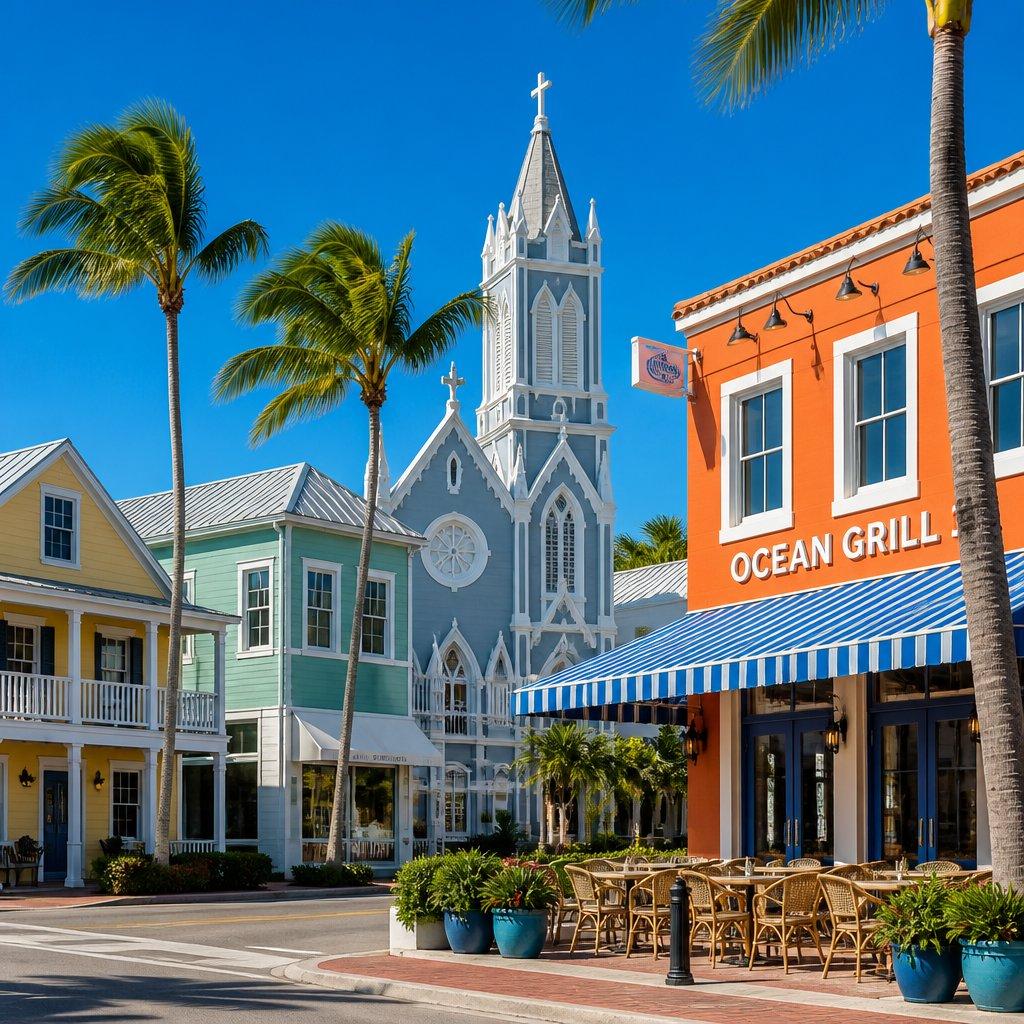
A hospital cannot close a wing to repaint it. A school has roughly ten summer weeks to get every building done. A restaurant losing its patio for a week is losing real revenue, and a church often funds its repaint from the collection plate and needs it to last a decade.
The best exterior paint for Florida is not a single product. It is the product that fits how the building is used, how often it can be touched, and what the climate throws at it.
What stays constant is the climate. Strong UV bleaches color, humidity feeds mildew, and salt air works under weak coatings near the coast.
What changes from building to building is everything else: occupancy, cleaning demands, code requirements, downtime cost, and the budget cycle behind the project. Choose a coating that ignores those realities, and you repaint years early, often at the worst possible time.
This guide walks through what the best exterior paint for Florida looks like across six building types: churches, hospitals, schools, government offices, businesses, and restaurants, plus the specs and approval steps that protect any of them.
Before the building-type differences, four properties decide whether any exterior paint survives here. Miss these, and nothing else matters.
These traits work together. Block UV but trap moisture, and a wall still blisters. That is one of the reasons large Florida buildings need specialized coatings rather than a general-purpose paint.
A coating spec that suits a quiet office can fail at a restaurant where exterior walls get degreased weekly, or at a school where lower walls take daily contact. The surface, the exposure, and the wear pattern all shift the right choice, which is why it pays to match the product to the building rather than the brand on the can.
Churches tend to be large masonry or stucco structures, sometimes historic, often repainted on a long cycle funded by the congregation. The goal is maximum service life with minimal disruption to weekend services.
Sanctuary walls, bell towers, and steeples catch sun and wind from every side, and the high sections are expensive to reach. A premium 100 percent acrylic with strong UV-stable pigments earns its cost here, because stretching the repaint cycle saves on scaffolding and lift rental as much as on paint. Lighter, reflective colors hold their look longer on those tall faces and ease heat load on the building.
Older churches mix stucco, block, wood trim, and sometimes decorative masonry, each needing its own primer and topcoat.
On aging stucco with hairline cracking, an elastomeric coating bridges the gaps, while detailed wood trim and doors do better with a harder enamel that holds a crisp edge. Coordinating one primer-and-topcoat system across the substrates keeps future touch-ups and warranties simple.
Healthcare exteriors run on constant occupancy and strict standards. You cannot evacuate a wing, and the work has to stay low-odor and low-disruption while still lasting.
With patients and staff present around the clock, low-VOC waterborne systems matter more here than almost anywhere. They keep odor down during application and let crews work section by section without clearing occupied areas. Phasing the job around quieter wings, with periodic inspections, keeps the project moving without affecting care.
Entry canopies, ground-floor walls, and service areas take heavy traffic and frequent cleaning. A harder, washable film at those levels resists scuffing and stands up to repeated wipe-downs, while a breathable acrylic handles the broad upper walls. Mildew resistance is non-negotiable on shaded courtyards and north faces where humidity lingers.
School painting lives or dies by the calendar. Most exterior work happens in a tight summer window, so fast, reliable curing and durable surfaces are everything.
Summer is also peak heat and humidity in Florida, so crews start early and watch surface temperature and dew point closely. A coating that cures predictably in those conditions keeps the project on schedule before students return. Building in buffer days for afternoon storms is part of any realistic school timeline.
Lower walls along walkways, gym exteriors, and entryways take daily hands, balls, and backpacks. These high-contact zones need a tougher, scrubbable film, the same logic behind choosing enamel finishes for high-wear surfaces. A graffiti-resistant or easily recoatable surface on accessible walls saves maintenance staff real time during the year.
Public buildings are held to longevity and accountability standards. The spec has to be defensible, code-aware, and built to minimize maintenance spending over years.
Municipal projects benefit from a written, warrantied specification that every bidder prices the same way.
Coatings should meet the relevant requirements under the Florida Building Code, and on large flat or low-slope wall and roof areas, reflective finishes that meet cool-surface and energy guidance can cut heat gain and cooling costs. Documentation matters as much as the paint, since public maintenance budgets are reviewed and justified.
For a building maintained on taxpayer money, the gallon price is a small part of the picture. Labor, access, and downtime dominate, so a premium coating that adds years between repaints lowers the true lifecycle cost. A spec that names primer, mil thickness, and prep standards keeps that value intact through the bidding process.
Commercial storefronts trade on appearance, and they cannot afford long closures. Color accuracy and a quick, clean turnaround drive the choice.
A business exterior is part of its sign. Accurate, lightfast color keeps a brand looking sharp, and deep brand colors need lightfast pigments so they do not wash out in the sun within a couple of seasons. Matching a corporate color precisely across multiple locations is far easier when a local paint manufacturer can lock the formula to a code.
Retail and office repaints work best phased after hours or across a weekend, with fast-recoat acrylics that let a crew finish an elevation without closing the business. Mildew resistance keeps shaded entries and north walls from looking neglected between cycles.
Restaurants combine all the hard parts: grease, constant cleaning, health-code scrutiny, and revenue tied to outdoor seating that cannot stay closed.
Exterior walls near kitchens and service doors collect grease and get scrubbed often, so a washable semi-gloss film holds up far better than a flat finish there. Mildew resistance matters on shaded patios and around constant moisture from dish areas and misting systems.
Patios and entries are revenue, so the work has to move fast and clean. Low-odor coatings and tight phasing let a restaurant keep serving while the crew progresses. Pulling specs and inspections together with a manufacturer keeps a tight schedule from slipping.
Whatever the building, the same few steps protect the budget and keep a warranty enforceable. It comes down to specifying before you order.
A supplier with real Florida experience helps spec the job, so the warranty holds, and the coating fits the building's use, not just its walls.
That kind of hands-on commercial and institutional painting support reduces field failures, and a referral to vetted, licensed crews means the product goes on the way the spec intended. Locking the spec before bidding lets every contractor price the same scope, so you can compare bids and hold them accountable.
If a repaint is on the horizon, get a consultation before you request bids. Lock the product and the spec first, and the rest of the process gets simpler and more defensible.
Talk with the team at UCI Paints before you buy a single gallon. A short, free consultation gets you a written spec with approved codes, color recommendations, and contractor referrals built for South Florida buildings. Call (954) 581-6060 or contact the Fort Lauderdale team to start, with factory-direct pricing and free delivery across the region.
A 100 percent acrylic latex with UV-stabilized binders and a built-in mildewcide usually lasts longest on Florida stucco and masonry buildings. Look for products tested in subtropical conditions, applied at the recommended thickness over the right primer. On cracked masonry, an elastomeric can extend service life if the surface is prepped correctly.
Healthcare exteriors should use low-VOC waterborne acrylics so crews can work near occupied areas with minimal odor and disruption. Pair a breathable acrylic on upper walls with a harder, washable film at ground level for cleanability. Strong mildew resistance is essential on shaded courtyards and north-facing walls.
Schedule the work for the summer window and choose a fast, predictable-curing acrylic, since summer brings peak heat and humidity. Use a tough, scrubbable film on lower walls and entryways that take heavy daily contact, and build buffer days into the timeline for afternoon storms.
Restaurants should use a washable semi-gloss film on walls near kitchens and service doors, since those surfaces collect grease and get scrubbed often. Mildew resistance matters around patios and moisture-heavy areas. Low-odor coatings and tight phasing let the business keep serving while the work gets done.
Climate sets the baseline, but occupancy, cleaning demands, code requirements, and downtime cost change the right product. A church needs long service life on tall walls, a hospital needs low odor and cleanability, and a restaurant needs grease resistance. Matching the coating to how the building is used is what prevents early failure.
Get a written manufacturer spec before bidding that names the required primer, mil thickness, and prep standards, and confirm the warranty covers exterior masonry in humid or coastal conditions. Have the manufacturer inspect the application. Documenting the product, codes, and conditions is what keeps a warranty enforceable later.
