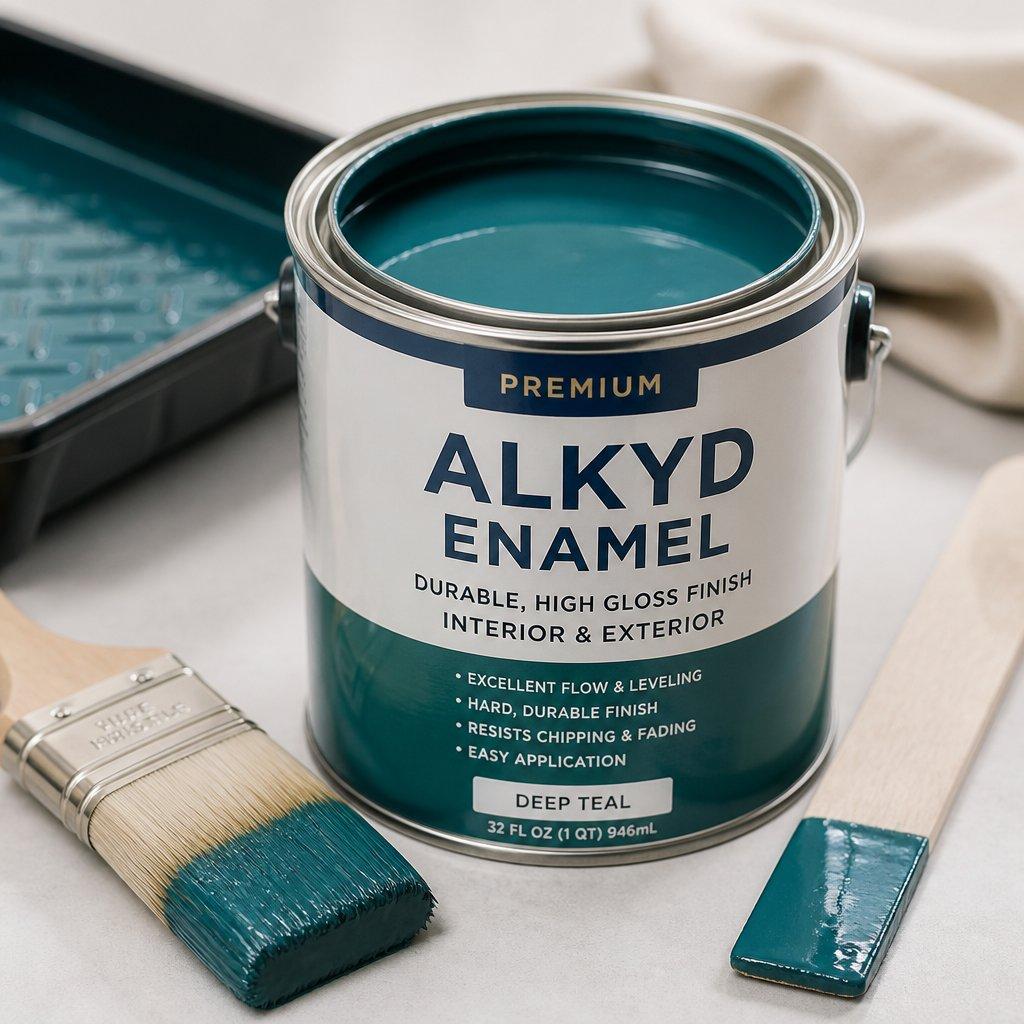
Walk a South Florida property in the morning, and the failure pattern is easy to spot. The stucco walls still look fine, but the clubhouse entry doors feel sticky at the latch, the paint has gone chalky, and the edges are peeling where hands and rain hit hardest. Almost every time, someone coated a high-contact door with ordinary wall paint. That is the gap alkyd enamel was built to close.
So what is alkyd enamel, in plain terms? It is a hard-curing, oil-based finish made for the surfaces that take real abuse: doors, trim, railings, and frames, not broad walls. You do not need a chemistry background to use it well. You just need to know what the name means, where the finish earns its keep in this climate, and where a softer coating will actually last longer.
This guide keeps it simple. You will learn how alkyd enamel cures, why it dries so hard, which Florida surfaces it suits, and the few questions that keep you from putting it in the wrong place.
The term has two parts, and both tell you something useful before you ever open a can.
"Alkyd" refers to the resin, the binder that holds the paint together and sticks it to the surface. Alkyd resin is made by cooking oils together with a few other ingredients, so the finish behaves like an oil-based coating. "Enamel" is the older paint-trade word for a coating that cures to a hard, smooth, washable shell. Put them together, and you get an oil-based paint that dries far harder than the latex on your walls.
That hardness is the whole point. On a surface that gets touched, scrubbed, or rained on every day, a tough shell holds up where a soft film wears through.
Here is the part most people miss. Latex wall paint dries: the water evaporates, and the paint is set. Alkyd enamel cures, which is a slower chemical change. The resin reacts with oxygen in the air and slowly knits itself into one continuous, rigid film over several hours.
That curing reaction is why the finish ends up so dense and smooth. It also explains the trade-offs you will read about later, like longer wait times between coats in humid air.
Traditional alkyd enamel is solvent-based, so cleanup needs mineral spirits, not water. There is also a newer waterborne version that cleans up with soap and water but still cures with that oil-modified hardness. Both rely on the same alkyd resin chemistry. Researchers have spent years developing lower-odor waterborne alkyd formulas, so crews get the hard finish without the heavy fumes.
Once you picture how the resin sets, the finish's strengths and limits both make sense.
Because the cured film is so tight and dense, it resists dents, scuffs, and the friction of constant handling. A front door touched dozens of times a day, or window trim soaked by every afternoon storm, needs that kind of surface. Softer latex on those same spots can wear through in a year or two.
The film also levels out as it cures, so brush marks settle, and you get a smoother look. For most people, that finish quality is the first thing they notice on a freshly enameled door.
A common mix-up is thinking enamel only describes glossy paint. It really describes the cured result: a firm, scrubbable surface. You can find enamel finishes in different sheens. What stays constant is the toughness, which is exactly what high-traffic Florida surfaces need.
You do not have to guess. A few surface types are almost always the right home for alkyd enamel.
Exterior doors face the sun all day and constant hand contact. Window trim and shutters move a little with every temperature swing and get drenched in the wet season. A quality enamel grips these surfaces, holds a crisp edge on detailed trim, and keeps its look longer than wall paint would. These are the classic enamel paint uses on doors and trim, and they are where paint failure is most visible to residents.
Metal railings, gates, and handrails near the coast live in a tough spot. Salt air pulls in moisture and speeds up rust wherever a coating is thin or chipped. The dense enamel film seals prepped metal better than thin latex, as long as the surface is cleaned and primed first. High-touch metal indoors, like stair railings in a clubhouse, benefits from the same hardness because it gets cleaned so often.
This is the most useful thing a beginner can learn: do not put alkyd enamel on big stucco walls. Stucco expands and contracts daily, and the rigid enamel film cannot flex with it, so it cracks and peels. Broad walls want a breathable, flexible coating instead. Matching the coating to how much a surface moves is half the battle, and it is the same logic behind why paint behaves the way it does in a tropical climate.
You do not need to know the chemistry to make a smart call. You just need the right short list before anyone starts painting:
If a bid puts alkyd enamel on wide stucco, treat that as a flag and ask why. A good plan assigns each coating to the surface it actually fits.
Alkyd enamel is a specialist, not an all-purpose paint. On doors, trim, railings, and coastal metal, its hard, dense film outlasts softer coatings by years. On stucco and anything that flexes in the heat, a breathable acrylic is the better tool.
Knowing the difference is most of what separates a finish that lasts from one you redo too soon, and it is worth confirming before a single door gets coated. If you want to see how the right coatings hold up on real buildings, browse a few finished South Florida paint projects.
If you are weighing a coating for trim, doors, or metal, a quick conversation saves a lot of second-guessing. Schedule a free consultation with UCI Paints for product specs, color help, and referrals to contractors who know South Florida surfaces.
A local manufacturer that has formulated coatings for this climate since 1970 can tell you where alkyd enamel fits and where it does not. Call (954) 581-6060 or contact the Fort Lauderdale team to start.
Alkyd enamel is an oil-based paint that cures into a hard, smooth, washable shell. The "alkyd" is the oil-based resin that binds it, and "enamel" means it dries to a tough finish. It is made for high-contact surfaces like doors, trim, and railings rather than broad walls.
Traditional alkyd enamel is oil-based and needs mineral spirits for cleanup. There is also a newer waterborne version that cleans up with soap and water while still curing to an oil-modified hardness. Both use alkyd resin, so both dry harder than standard latex.
Use it on exterior doors, window trim, shutters, frames, and prepped metal railings, the surfaces that get handled, scrubbed, or rained on daily. Avoid it on large stucco walls, which move too much for the rigid film and need a flexible, breathable coating instead.
It cures by reacting with oxygen in the air, a process that knits the resin into one dense, continuous film. That density is what resists dents, scuffs, and constant contact, and it also lets the surface level out for a smoother look than softer paints give.
Curing relies on a chemical reaction, so humid air slows it down. Traditional alkyd enamel that might recoat in six to eight hours in ideal weather can need ten to twelve hours or more on a sticky afternoon. Crews usually paint in the morning to give it time before the humidity climbs.
Latex paint dries as water evaporates and stays slightly flexible, which suits walls that move. Alkyd paint cures by oxidation into a harder, more rigid film, which suits high-contact surfaces. The right choice depends on whether the surface needs to flex or needs to resist wear.
