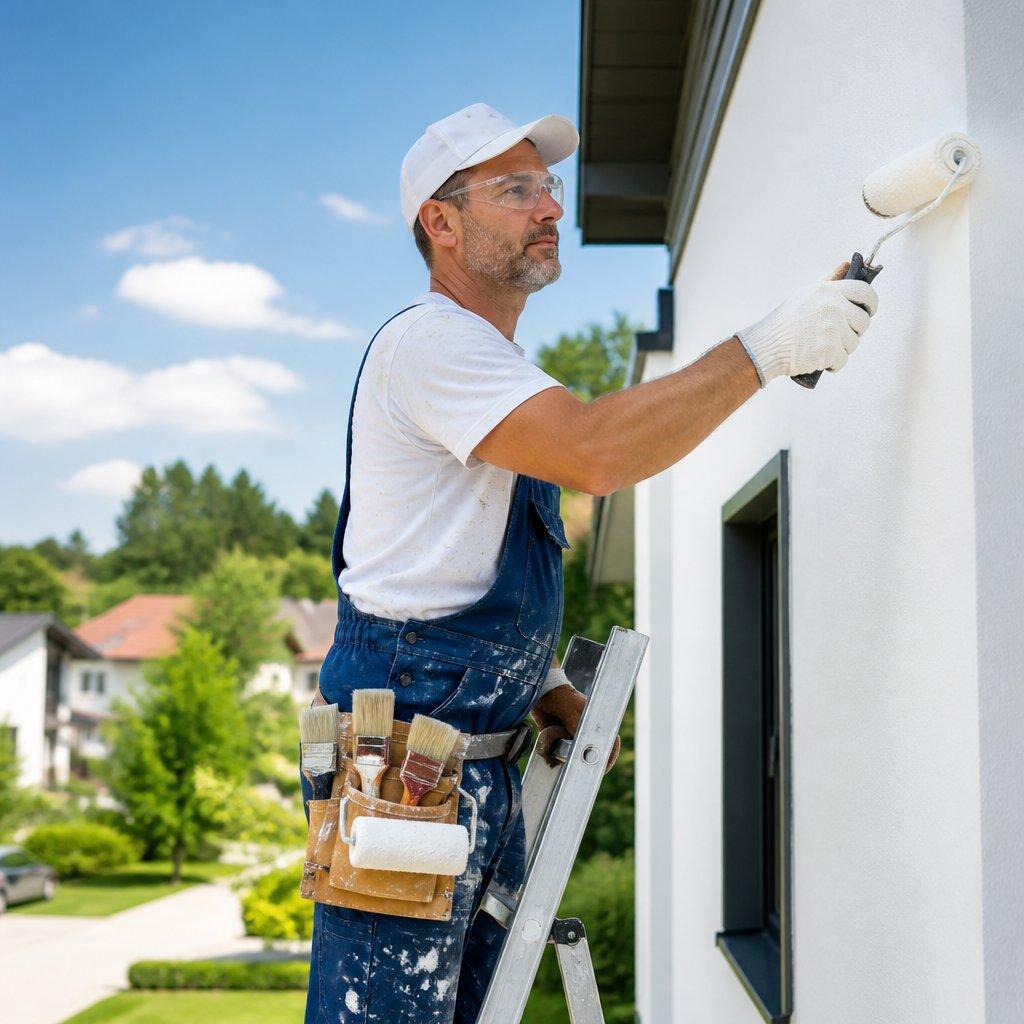
When your board signs off on a community repaint, whether it is 50, 100, or 300-plus units, the contractor you choose shapes your budget, timeline, and curb appeal for years.
Pick the wrong Fort Lauderdale painting contractors, and you can see peeling paint after two hurricane seasons, change-order disputes, and a parade of resident complaints at board meetings. Broward County's climate is relentless, so vetting goes well beyond an online rating.
This guide is built for the board's side of the table: the governance, accountability, and oversight questions that protect an association's investment.
It assumes you already know you want a quality job, and focuses on how to confirm a crew can actually deliver one in this climate, and how to keep them honest once the work starts.
Here is what to check before you ask for a single proposal: licensing, insurance, crew structure, climate-specific prep, clear bids, warranty terms, communication standards, and independent oversight.
Florida licensing and current insurance are not optional, but boards sometimes rush past them toward color and price. Confirm the legal and financial basics first, because they are what shield your association from liability.
Florida requires painting contractors to hold an active state license for jobs above a set dollar amount, verifiable through the Department of Business and Professional Regulation (DBPR). Ask for the general liability policy, workers' compensation certificate, and auto liability coverage, and make sure your association is named as an additional insured for the whole project.
For buildings constructed before 1978, federal lead-safe certification for pre-1978 buildings is required. Even on newer properties, asking about it signals whether a contractor tracks compliance. Put these on your pre-qualification list:
This is where board-level vetting earns its keep. Some painters staff big jobs with day laborers classified as independent subcontractors. If an uncovered worker is hurt on your property, the claim can land on the association's insurance.
Ask whether crews are W-2 employees or 1099 subcontractors, and get proof of coverage for every type of worker on site.
Supervision matters just as much. On a 200-unit repaint, you might have 15 to 20 painters working at once. You need to know who is in charge, how many people they oversee, and how quality gets checked building by building.
A contractor who cannot answer that will struggle to keep prep and coats consistent across your property.
To weed out unqualified bidders fast, ask how they prep stucco in a humid, salt-heavy environment. If the answer matches what they would do in Atlanta or Phoenix, they are not ready for your buildings.
Stucco covers most South Florida condos and townhomes. It is porous, so it absorbs moisture, grows mildew, and traps salt that wrecks adhesion if it is not removed. Good contractors test stucco moisture with a meter and will not prime until readings fall below the manufacturer's limit.
Mildew is not a rinse-and-go job. Ask whether the crew applies a mildew-killing solution before pressure washing and how long it dwells. "Pressure washing is enough" is a warning sign, because mildew roots live inside stucco and return through fresh paint within months.
On bare or chronically damp walls, clear stucco sealers add another layer of moisture defense.
Ask each bidder which primer they would use on salt-exposed stucco and why. A strong answer names an alkali-resistant or moisture-blocking primer and explains how it stops efflorescence, the white powder that bleeds through topcoats on masonry.
They should know why coatings made for salt, sun, and humidity outlast standard latex in coastal Broward. "We use whatever the homeowner wants" tells you they lack the expertise your project needs.
HOA repaint disputes almost always start with a fuzzy scope. Two bids that look $40,000 apart may simply cover different prep, coat counts, or repair allowances. You cannot compare them without clear specs.
If one bid lists fewer topcoat coats, the lower number is not a bargain; it is less paint on your building. In full sun, a single topcoat fades and chalks far faster than a two-coat system.
Your contractor should hand over a spec sheet listing every product by manufacturer, line, sheen, and color code. This becomes your file for touch-ups, warranty claims, and future bids. Without it, matching colors in five years is guesswork.
Color documentation should include physical samples on your actual walls, not fan-deck chips, because stucco texture and sunlight shift how a color reads. Boards that skip this often end up with exterior colors that miss expectations once the job is done.
A warranty only matters if it covers what you are likely to face: mildew breakthrough, adhesion loss on damp stucco, and UV fade. Generic one-year guarantees do not.
Get the warranty in writing before you sign, and weigh these:
Contractors using paint formulated for this climate can often offer a longer warranty, since the product is built for local stress. Ask whether the manufacturer stands behind it or it rests entirely on the contractor.
Inspections during the work catch shortcuts before they become warranty claims. Ask for a minimum schedule: one after pressure washing, one after priming, and one after the first topcoat, each backed by dated photos and sign-off sheets. Some contractor referral and oversight programs even send a manufacturer's rep weekly to check coating thickness, product usage, and whether temperature and humidity match the paint's requirements. That third-party layer means you are not just taking the contractor's word for it.
Even a strong paint job goes sideways if residents cannot park, reach their units, or get schedule updates. Communication breakdowns create more board headaches than color disputes ever will.
Before work starts, your contractor should provide a written phasing plan: the order buildings get painted, how long each phase runs, and where crews park and stage. For gated communities, sort out access credentials and gate codes with your property manager ahead of day one.
Each morning, the crew lead should check in with the property manager or the board's point person, flag weather delays, and report hidden issues like rotted fascia that may need a change order. Residents deserve at least 48 hours of written notice before crews arrive, with reminders to move furniture and cars and to close windows. Wet-season rain delays from May through October are a given, so confirm the contractor has a written rain policy.
The proposal phase previews how communication will go. Note how fast each bidder replies, how detailed the answers are, and whether they follow up. A contractor who takes a week to return a call before you have signed will not improve once the job starts. Ask for the direct contact of your main point person, and push back if they route you to a generic office line. Multi-unit repaints run smoother with one accountable person who knows your property and your association's rules.
The most protected boards do not rely on the painter to police themselves. They bring in an independent party, often the paint manufacturer or a third-party inspector, to confirm the right products and standards are followed start to finish.
When a manufacturer stays involved after the sale, the accountability shifts. If the rep visits the site, checks mil thickness, and confirms product usage, the contractor knows someone is watching and will report shortcuts to the board. This works best when the manufacturer helped write the specification. A South Florida paint manufacturer that makes its own coatings can specify exact products, primers, and application windows for your buildings, then enforce that spec because it knows the products inside and out.
Some associations look for firms that handle painting, waterproofing, structural coatings, and moisture management together. That combined model is appealing when a building has water-intrusion problems regular paint cannot fix. The trade-off is usually cost, since firms that manage both coatings and envelope repair tend to charge more than standard painters.
If your building needs specialized paint and envelope repair, that premium can save money down the road. For buildings in decent shape, a solid painting contractor plus independent manufacturer oversight can deliver similar results for less.
Look up the license number on the Florida DBPR website to confirm it is active. Ask for current insurance certificates directly from the contractor's carrier, not the contractor, and confirm liability and workers' comp will be active for the whole job.
A thorough estimate breaks out pressure washing, mildew treatment, stucco repairs, primer coats, topcoats, trim paint, caulking, and cleanup. Each line should name the product, sheen, and number of coats, and exclusions and change-order rules should be written down.
100 percent acrylic latex coatings with UV-stable pigments and built-in mildew inhibitors hold up best. Avoid vinyl-acrylic or oil-based paints on broad walls. Look for coatings rated for high humidity and salt-air exposure, and ask the manufacturer for fade-resistance data.
Good crews start with a mildew-killing chemical, let it dwell, then pressure wash at 1,500 to 2,500 PSI. After washing, they check stucco moisture with a meter and wait for readings to drop below the primer's threshold before painting.
Expect at least a two-year labor and workmanship warranty, separate from the paint manufacturer's product warranty. The labor warranty should cover peeling, blistering, and mildew caused by prep or application mistakes. Always get the terms in writing before you sign.
Start with a written phasing plan that lays out building order, daily schedules, and staging. Coordinate gate access and resident notice with your property manager at least 48 hours before each phase, and build rain-delay contingencies into the schedule for the wet season.
Vetting a painter for a community repaint takes more than one phone call. You now have a board-level framework: licensing, insurance, crew structure, surface prep, bid clarity, warranty terms, communication, and independent oversight. Each item protects your association's budget and keeps residents satisfied long after the paint dries.
The best results come when your paint supplier acts as a true project partner. Schedule a free consultation with UCI Paints for color advice, product specs, and contractor referrals built for South Florida. Call (954) 581-6060 or visit ucipaints.com to start.
