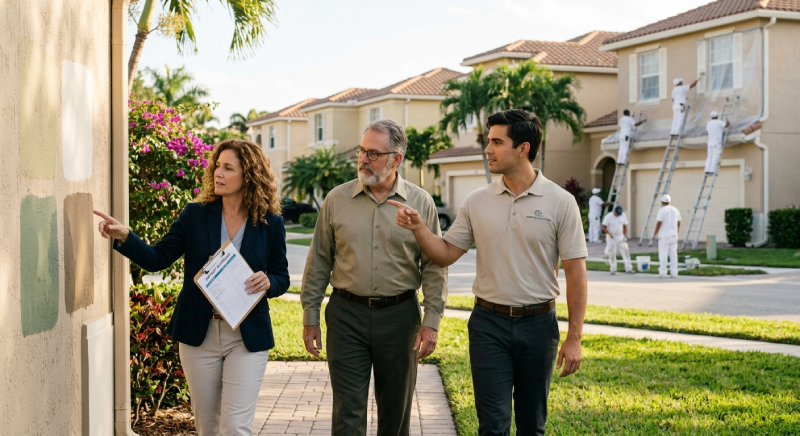
If you sit on an HOA board, you already know that a community repaint is one of the most visible — and most scrutinized — decisions you will make. Get it right and the neighborhood looks sharp, property values hold strong, and residents stop complaining. Get it wrong and you are fielding calls for months about mismatched trim colors, peeling finishes, and cost overruns.
The good news is that a well-planned community repaint does not have to be stressful. With the right process, the right contractor, and the right paint manufacturer behind you, it can be one of the smoothest projects your board ever manages. This guide walks you through exactly how to do it.
Exterior paint is often the first thing a visitor, prospective buyer, or current resident notices about a neighborhood. In South Florida especially, the combination of intense UV exposure, salt air, humidity, and seasonal rain means that exterior surfaces degrade faster than in most other parts of the country. What looked fresh three years ago can look tired and chalky today.
For HOA boards in Broward and Palm Beach Counties, a repaint is not just a cosmetic upgrade. It is a maintenance necessity that protects wood, stucco, and concrete from moisture intrusion, and it is a community investment that directly affects property values across the neighborhood. Delaying a repaint that is clearly needed can create liability and amplify costs down the road.
Understanding that framing from the start helps boards move through the planning process with appropriate urgency rather than letting it stall in committee.
Before a single bid is requested, your board needs a clear picture of what actually needs to be painted. Walk the community with someone who knows what to look for. You are evaluating:
This assessment becomes the foundation of your scope of work document, which every bidding contractor should receive. Without it, you will get wildly inconsistent bids that are nearly impossible to compare fairly.
HOA boards that go out to bid before establishing a realistic budget range tend to create problems for themselves. You either anchor too low and frustrate contractors, or you anchor too high and set expectations you cannot meet with your reserves.
For single-family HOA communities in South Florida, professional exterior painting services typically run in a range that reflects the number of homes, total square footage, surface prep requirements, and product quality. Communities that use a direct-from-manufacturer paint source, like UCI Paints in Fort Lauderdale, can often achieve better cost control because there is no distributor markup layered into the material pricing.
Before finalizing your budget window, check three things:
Getting these answers before the bid process protects the board legally and keeps the timeline on track.
Not every painting contractor is equipped for HOA work. Community repaints require experience coordinating with residents, managing access to occupied homes, working around vehicles and personal property, and delivering consistent results across dozens of surfaces that may have been painted at different times in the past.
When building your shortlist, look for contractors who:
That last point matters more than boards often realize. The contractor applies the paint, but the manufacturer determines how it performs over time. A contractor partnered with a regional manufacturer that understands South Florida conditions is a very different proposition from one using commodity products not formulated for this climate.
Once your shortlist is ready, send every contractor the same scope of work document. Ask for bids that break out labor and materials separately. This separation matters because it lets you see whether a lower total bid reflects genuinely competitive labor rates or simply cheaper materials that may fail sooner.
Your bid package should also ask each contractor to specify:
When bids come back, resist the temptation to default to the lowest number. A bid that is significantly below the others usually signals something is being left out, whether that is proper surface prep, adequate primer coats, or quality materials.
Many HOA boards get caught in delays because they bring a contractor recommendation to the community before they have done enough groundwork. Residents who feel surprised or left out of the process can slow things down considerably.
A smoother approach is to communicate early and often. Before the board even goes out to bid, let residents know a repaint is being planned, approximately when it will happen, and how color decisions will be made. If your community requires board approval for color changes, make that process visible and clear from the start.
When you bring the final recommendation forward, present it with:
Boards that communicate this way almost always get smoother approval and fewer complaints during the project itself.
Color is where community repaints can get emotionally charged quickly. HOA governing documents typically specify either approved color palettes or a board approval process for color changes. Know your documents before residents start requesting custom colors.
If your community is doing a full color refresh rather than a like-for-like repaint, bring in samples early. Most professional contractors and paint manufacturers can provide large-format color samples for on-site review, which helps residents and board members evaluate colors accurately in actual sunlight rather than off a small chip.
In South Florida, color selection also has a practical dimension. Lighter colors reflect heat more effectively, which can reduce cooling costs inside homes. Colors formulated for UV resistance hold their vibrancy longer in intense sun. These are worthwhile conversations to have with your paint manufacturer before colors are finalized.
UCI Paints offers color consultation support for HOA communities in Broward and Palm Beach Counties
Once a contractor is selected and a start date is confirmed, the board's job shifts to coordination and communication. Establish a single point of contact on the board for contractor communication. This prevents conflicting instructions and keeps the project moving cleanly.
Set up a communication channel to keep residents informed throughout the project. A simple email update at the start of each new phase of the community goes a long way toward preventing frustration. Let residents know at least 48 to 72 hours before painting begins on their section so they can plan accordingly for vehicles, outdoor furniture, and pets.
Document everything throughout the project. Photograph surfaces before painting begins, note any damage or pre-existing conditions, and keep written records of any changes to scope or timeline. This documentation protects the board and the community if any disputes arise after completion.
The difference between a community repaint that impresses residents and one that generates complaints usually comes down to three things: preparation quality, product quality, and communication quality.
Surface preparation is the unglamorous work that determines whether a paint job lasts five years or twelve. Proper cleaning, patching, priming, and caulking take time and cost money upfront, but they are what make the difference in longevity. A contractor who skips preparation steps is not saving you money. They are deferring the next repaint.
Product quality matters because paint formulated for South Florida conditions behaves differently than commodity exterior paint. Regional manufacturers who understand local humidity, UV intensity, and the specific challenges of stucco and concrete block construction build those factors into their products. The result is a finish that holds up and keeps the community looking sharp for years longer.
And communication quality, as covered throughout this guide, is what keeps residents satisfied and the board protected from the political fallout that can follow a large community project.
UCI Paints works directly with HOA boards and property managers across Broward and Palm Beach Counties. As a family-owned, third-generation paint manufacturer based in Fort Lauderdale, we understand what South Florida surfaces demand and we build our products to meet those demands.
Whether you are in the early assessment phase or ready to recommend a paint partner to your contractor shortlist, we are here to help. Contact UCI Paints to schedule a consultation for your HOA community repaint and let us show you what working with a local manufacturer that knows this market looks like.
UCI Paints is a Fort Lauderdale-based paint manufacturer serving HOA communities, condo associations, and property managers throughout South Florida.
